When it comes to heavy‑duty lifting solutions, smart engineering and precise execution make all the difference. Our latest project with AMS Constructions at Wendy’s Bayswater demonstrates what it takes to manage extreme loads and handle real‑world installation challenges and successfully deliver complex truss modules.
A Design Built for Strength: 8‑Tonne Load Capacity
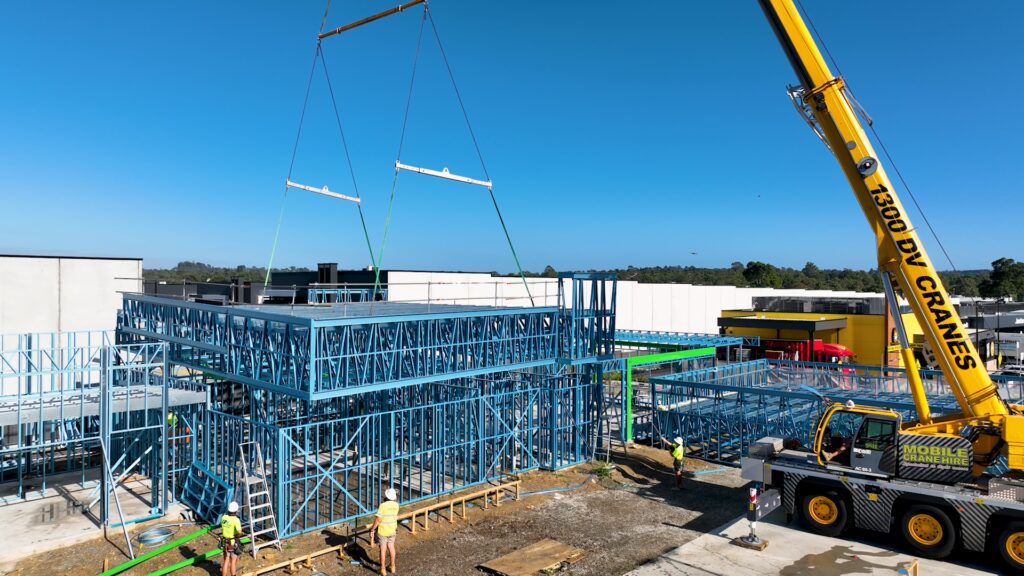
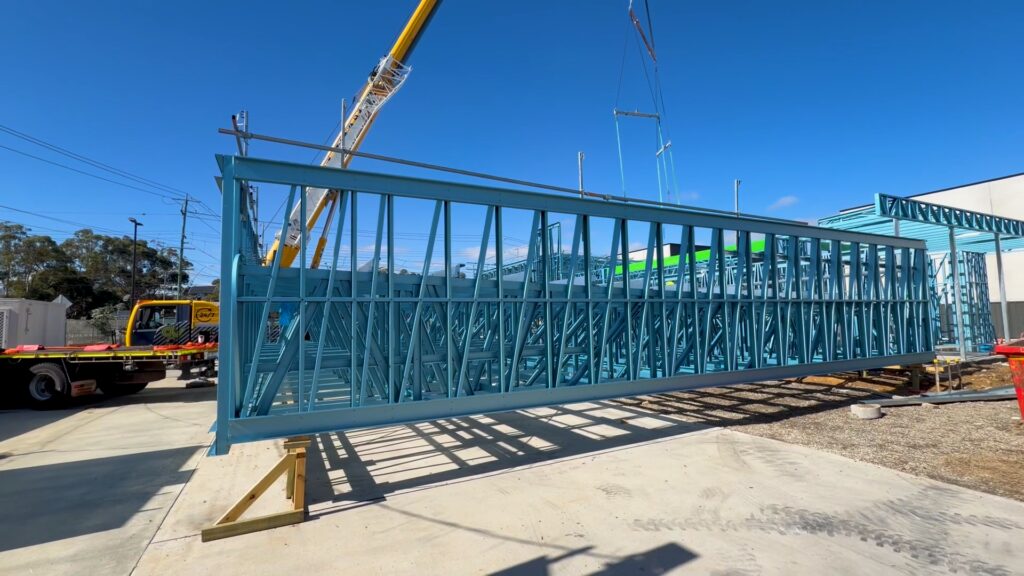
Engineers designed both modules to achieve an 8‑tonne design load, a requirement determined early in the structural phase. To safely support this level of force, our engineering team developed four dedicated lifting trusses, each purpose‑built to distribute weight effectively and maintain stability throughout the lift.
To further enhance performance and safety, these trusses incorporate:
- Additional scabs for reinforcement
- Increased screw connections to manage higher stress levels
- Careful detailing to ensure compliance with lifting and structural standards
Together, these features allow crews to raise, position, and secure the modules with complete confidence.
Scab Reinforcement: Essential Structural Strengthening
A key part of the truss design is the use of scab reinforcement, which ensures each lifting truss can safely manage the full design load. Scabs, or added steel plates, reinforce critical structural regions to increase strength where stresses peak, including at connection points and lift interfaces.
By increasing local thickness and stiffness, these plates distribute forces more evenly and minimise the risk of deformation, plate tearing, or connection failure under heavy loads. Scab reinforcement also allows for additional screw connections, improving load transfer and reducing stress concentrations during lifting operations.
In this project, the scabs provide essential structural resilience and redundancy, ensuring the trusses perform safely and reliably throughout the entire lifting and installation process.
Module 1: Heavy, Irregular, and Logistically Challenging
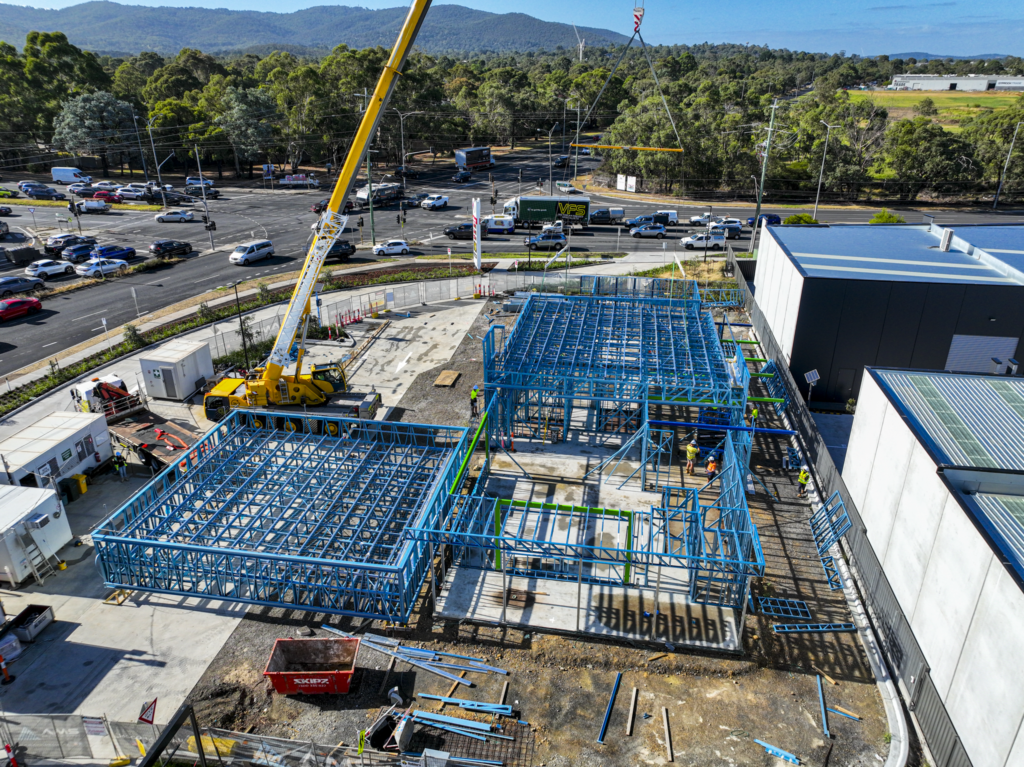
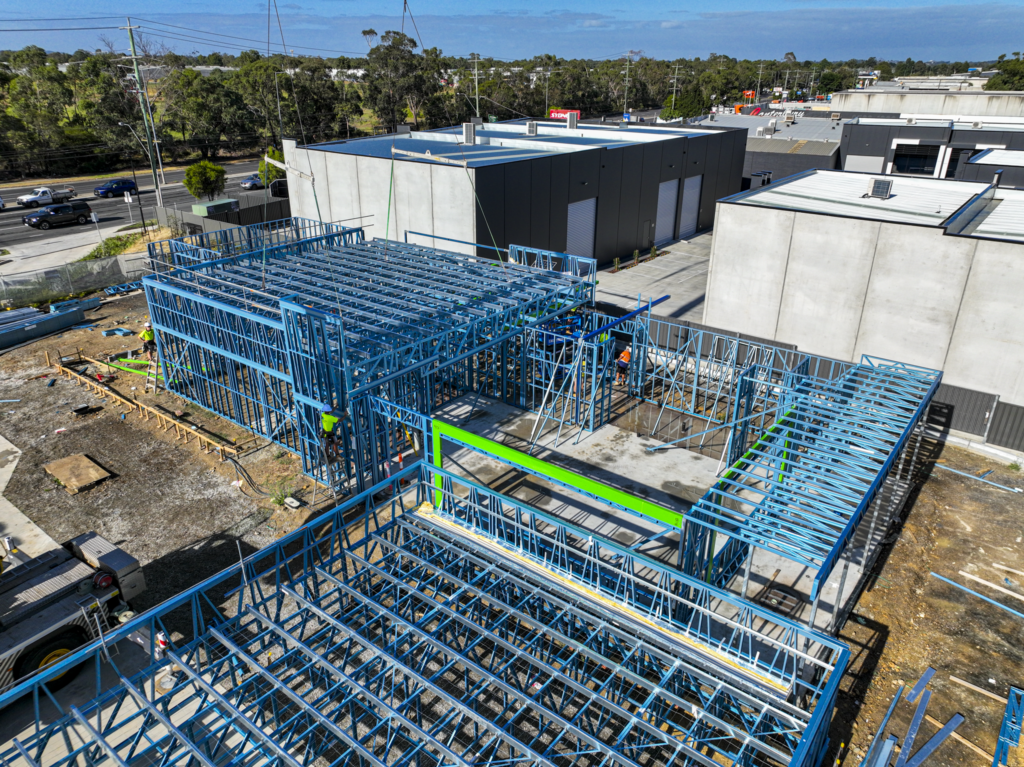
The first lifting module came in at nearly 6 tonnes—an impressive weight considering the precision required to manoeuvre it into place .Its irregular shape added another layer of complexity, particularly during the critical phase of lowering and slotting it into its final position.
This required:
- Rigorous lift planning
- Specialised rigging adjustments
- Close coordination between engineering, crane operators, and the installation crew
Insights From the Detailer
During the design stage, the team coordinated extensively to manage design changes, new requirements, and ongoing updates while keeping the model aligned with architectural and mechanical constraints. This demanded continuous communication across the project team to maintain buildable geometry and accurate load paths. Early installation plans paired the drive‑thru beams with the trusses during lifting, but the team refined the method to lift only the trusses, reducing rigging complexity and enhancing control on site.
Design Adjustments to Improve Fabrication & Installation
To improve both fabrication and on‑site efficiency, the team identified several opportunities:
- Modularising long/parallel lifting trusses into smaller sections ( 200 kg each) to improve handling and installation efficiency.
- Optimising truss profiles with the engineer to reduce weight and simplify rigging—aiming for 80 kg per truss, noting some current units exceed 119 kg.
- For irregular lifting modules, standardising the height of parallel trusses wherever possible to streamline alignment and installation on site.
Engineering Requirements That Added Complexity
Incorporating cranked beams for the oversized drive‑through canopy created additional detailing challenges, and evaluating whether these components should be lifted with the trusses required careful coordination to prevent clashes and ensure constructability.
Coordination at Each Project Stage
- Design stage: Close coordination with the project manager and the consulting teams to ensure the frame aligns with architectural intent and mechanical requirements—the mechanical interfaces were especially critical on this project.
- Installation stage: Rapid response to site queries, providing prompt solutions to minimise disruption and keep installation on schedule, while capturing feedback for continual improvement.
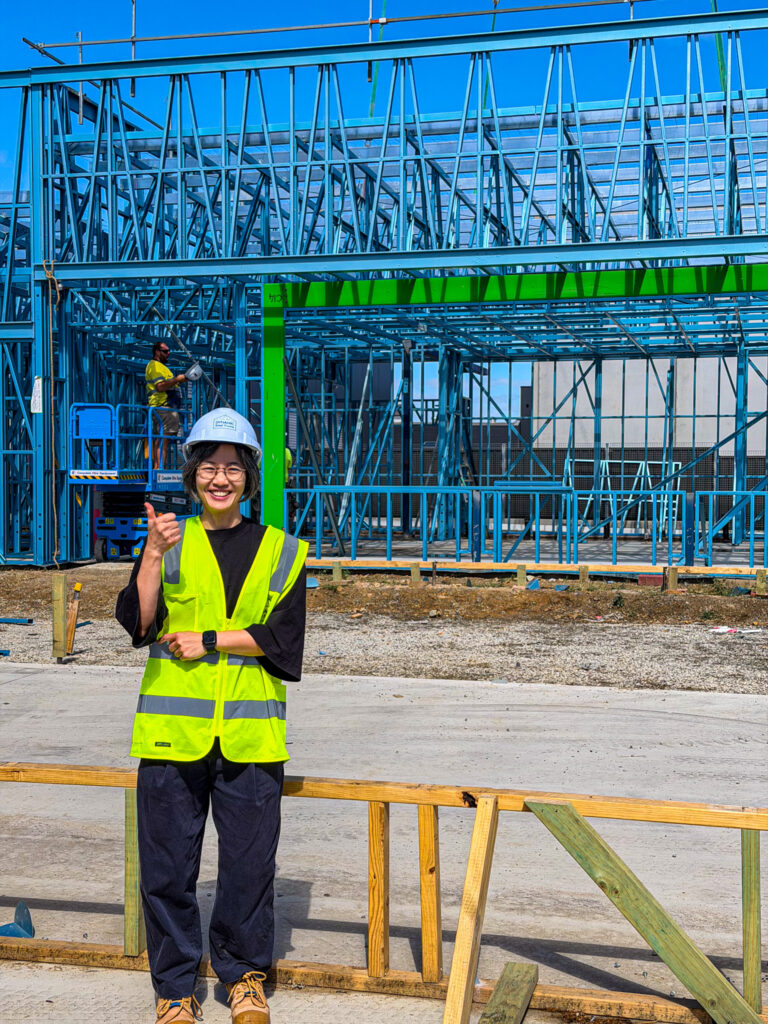
“Overall, this project was a great learning experience, the first of its kind I’ve detailed and the lessons gained will directly strengthen how I approach coordination, constructability, and standardisation on future modules.”
Su – Detailer
Delivering Safe, Reliable Lifting Solutions
From reinforced truss design to careful installation planning, the development of these lift modules reflects our commitment to precision engineering and safe work practices. Our team remains focused on delivering high‑performance outcomes backed by solid engineering principles.

Phone: 03 9701 7342
Email: sales@dynamicsteelframe.com.au